Heavy hitting electronic and instrumental fusion. Electronic beats, latin rhythms, soaring synths and orchestral strings, with violin riding on a deep bass drive.
Weaves you deeper into lush emotive strings in a continually evolving flow. I let the story write itself, and only later began to understand the narrative. The full cycle of death and rebirth.
Light, free, luminous. Transcend the weight of this world, then merge with the beyond. It carries you full circle, back to the hopeful and mysterious birth of KAN.
In Mayan symbolism, KAN represents abundance, fertility, virility, maturation and harvest.
The process of producing this work has felt like a huge maturation process, bringing me to a point of bearing musical fruit like never before. I share this first big harvest with a deep desire to contribute to a humanity that matures into inner and outer abundance.
Every single step
I put so much love into creating KAN, and personally took on every single step of the process. The inspiration for this music started in the Mexican Riviera Maya and I recorded it all in Mexico City, where I built my first acoustically treated studio with my own hands, placed the microphones, personally recorded every single element, and then mixed it. After a decade working alongside other people, this was the first full length work made completely alone, up to a professional production standard.
It was a huge process of learning and growth, and I am grateful for the opportunity to create it. With it, I begin giving back to the world what life first gave me at age nine, when it put a violin in my hands. I am honored to contribute my humble voice to the rich legacy of human music, and to be an instrument of the spirit of music.
KAN is pretty much the synthesis of my entire life experience so far, expressed in sound.
I am obviously biased, but I have not heard anything quite like it, and I bet you have not either.
How to listen
Not quick listening. Deep listening.
Listen straight through the full 105 minutes and let it take you on the journey, or go to the movement that makes you feel how you want to feel.
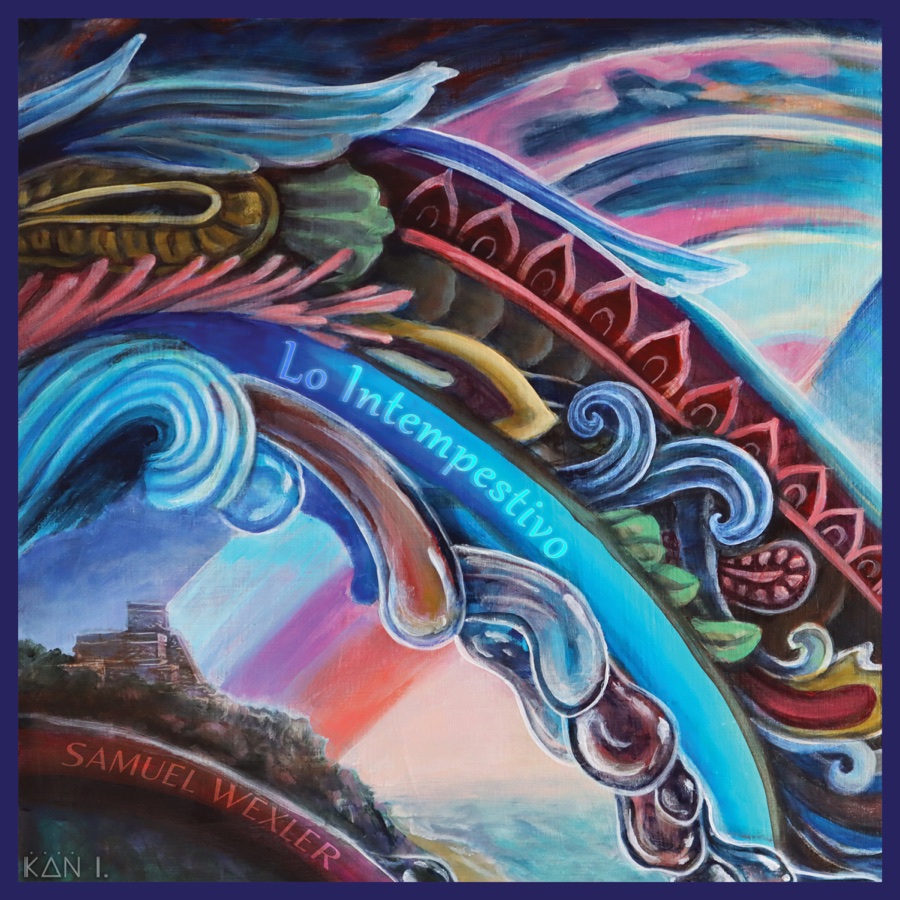
I wanted something even more ambient and washy than Wind Sings the Trees, so I stretched the chords to the max. The same harmonic progression gets stretched way out here and slowly washes over you in the deep ambient soundscape.
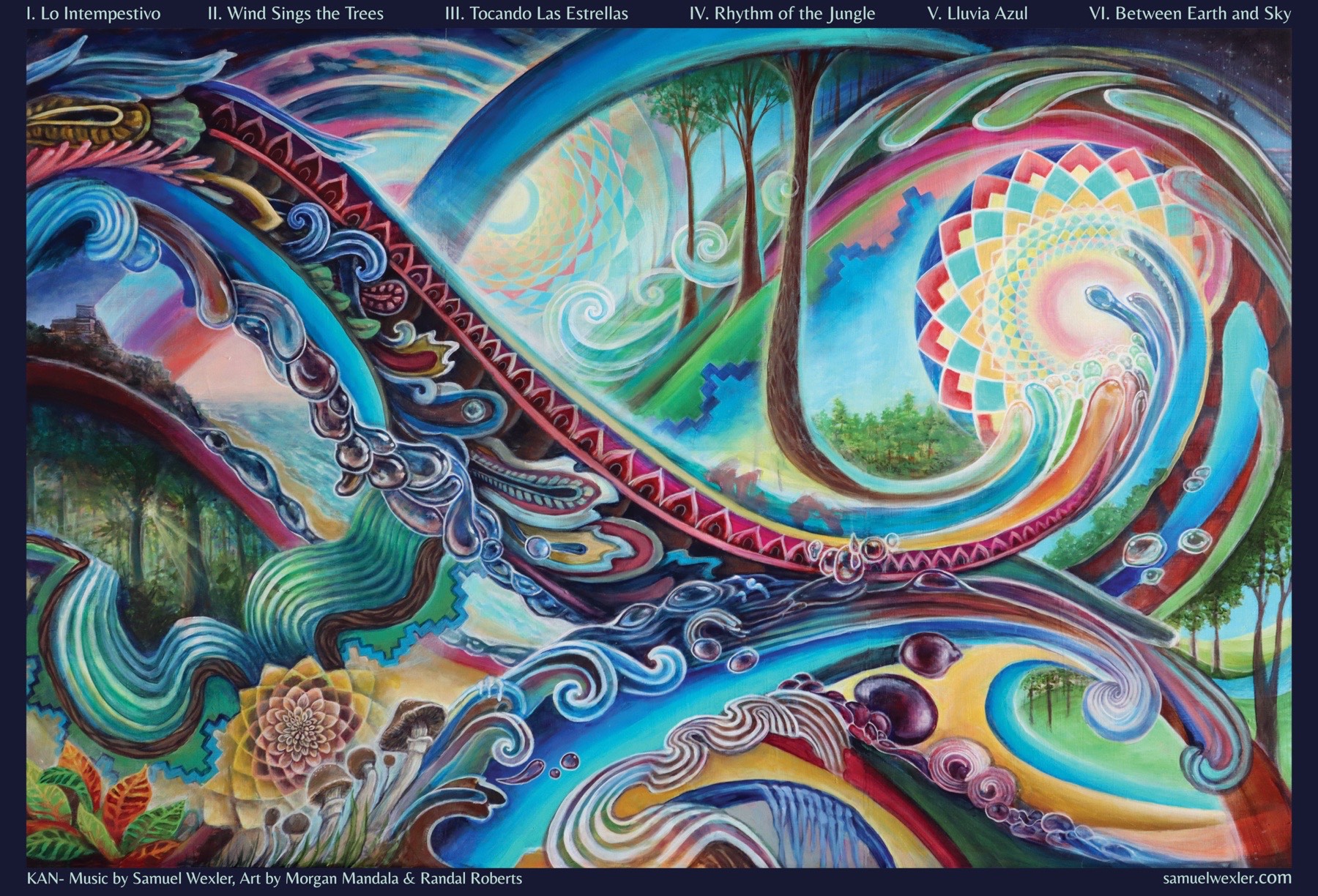
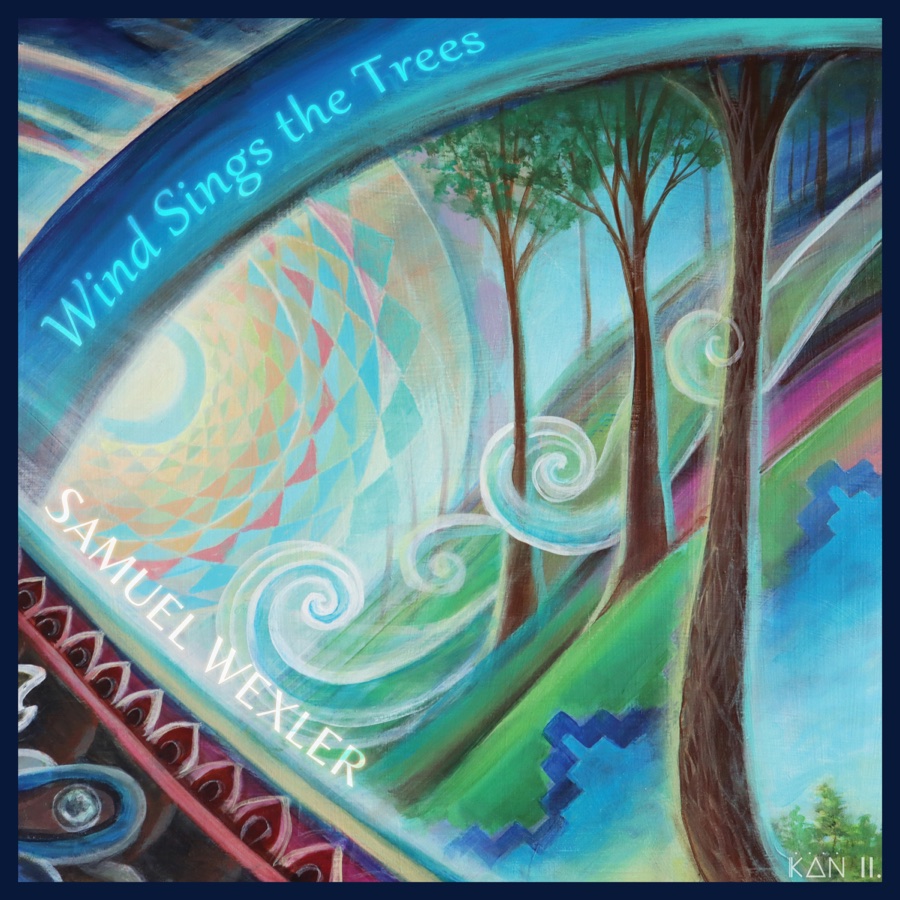
II. Wind Sings the Trees / Morgan Mandala and Randal Roberts
Want to feel Grounded & Free?
Movement II 7 min
Wind Sings the Trees
A contemplative guitar and violin duet on a vibrant textural soundscape, buzzing with life.
I sat outside my room in KAN Tulum with my 12 string guitar as the wind sang through the jungle trees around me. I took a deep breath and soaked up the beauty of the moment, and then without thinking, my hands formed the Cmaj7 chord and I slowly plucked each note of the chord. I listened intently and savored the resonance of the 12 string, as each new note of the chord blended with the others, joining the symphony of the wind and trees before slowly fading away.
THAT sounded like KAN to me. It sounded full of beauty, hope and wonder. I continued playing, and the rest of the harmonic progression for Wind Sings the Trees flowed out smoothly from there. Those harmonies became one of the musical seeds that blossom in unique ways throughout all six movements of KAN.
This was the first movement written. I knew I wanted something slow and contemplative.
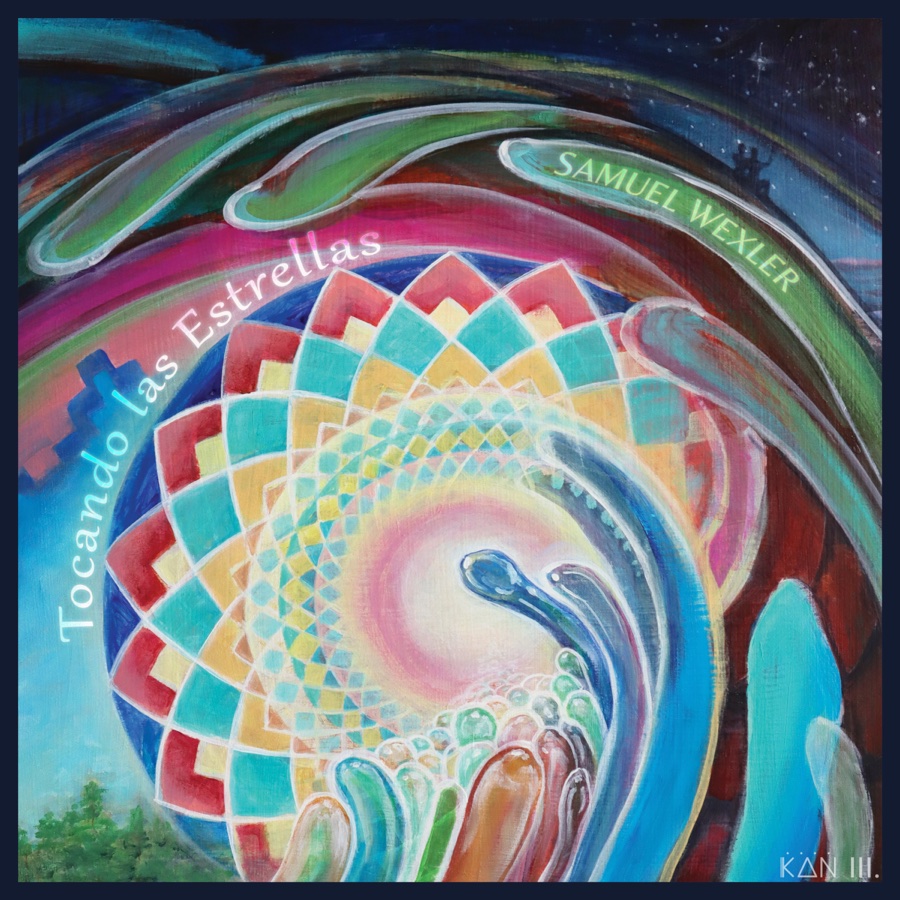
III. Tocando las Estrellas / Morgan Mandala and Randal Roberts
Want to feel Inspired & Wondrous?
Movement III 27 min
Tocando las Estrellas
Like a tour around the world and through time. This dynamic journey has a life of its own. It starts out smooth and sweet, then takes some dramatic turns. I surrendered control and let it tell its own story, and it takes us places even I never expected. A genre bending fusion of diverse soundscapes. Truly a piece for active listening all the way through.
My hands and ears naturally led me down into a darkening set of harmonies here, but I did not want the soundtrack to sit in the dark for very long. So I wrote a melody that rises up from underneath while the harmony keeps falling, moving in the opposite direction. The goal was to bring some light into a dark section, and to have that melody work both against those falling chords and on its own.
The surprises I did not anticipate but wanted to allow: the drum break, the Sanskrit chanting, the psychedelic moment, the Mozartian section. Finishing this movement was a major emotional breakthrough, the first proof to myself that I could finish the whole thing.
For musicians: how the hope theme is reharmonized
The chromatic descent, and the theme that rises against it
Here the KAN harmonies take rhythm for the first time, and evolve to new places. The descent is chromatic, and the emergent theme ascends against it in contrasting motion.
Hope generates hope
After managing to write this emergent rising theme on top of the chromatically descending chords, I became really interested in seeing how it would sound to have that same hopeful ascending melody played over a totally different type of chord progression, a more positive one. Instead of re-recording the melody for each harmonization I used the exact same recording, to further emphasize how dramatically the context can change the feeling of the EXACT same melody, even played in EXACTLY the same way.
When I heard the new chords and melody, it made me think of a Mozart quartet or piano quintet, so I tried my hand at creating a section in this style. Eventually I had an idea for a third reharmonization in a minor key, which took the music a different direction. As a violinist, chord progressions are not my strong point, so I really enjoyed practicing this, and the way it led the music to unexpected places.
Hear it for yourself. The melody in the second excerpt is the identical recording to the first. Only the harmony underneath it changed.
Between III and IV
Interdimensional Interlude
It emerged organically as I started playing with sounds at the end of Tocando las Estrellas, and became its own exploration of soundscapes: pure sound design, a totally different way of arranging sounds.
It rests the ear from melody, harmony and rhythm, a palette cleanser after a movement as winding as III, so you can listen again with fresh ears for the movements that follow. It began as part of one continuous piece, and it can also be left out: III and IV flow into each other well.
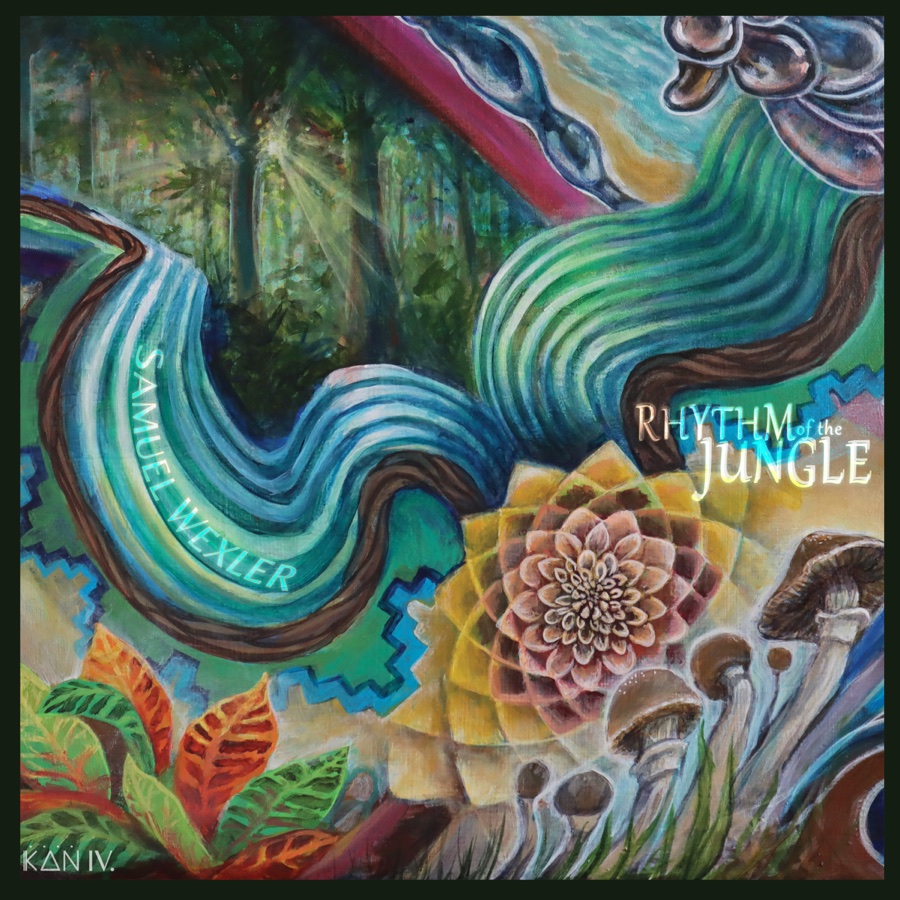
IV. Rhythm of the Jungle / Morgan Mandala and Randal Roberts
Want to feel Energized & Vital?
Movement IV 10 min
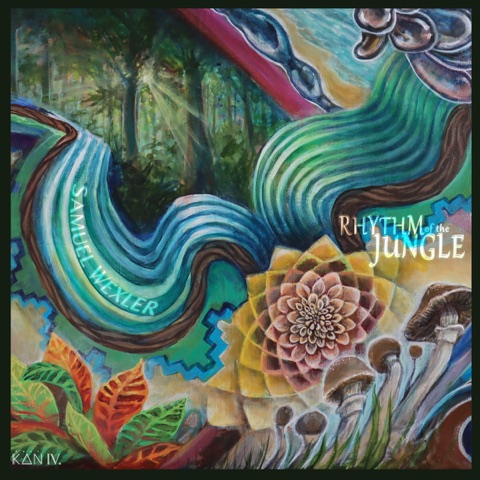
Rhythm of the Jungle
Heavy hitting electronic and instrumental fusion to pump you up, get you dancing, and let it all out. An invigorating blend of electronic beats, latin rhythms, soaring synths and orchestral strings. Feel the drive of the deep bass, with exquisite violins soaring on top.
I knew I wanted a more upbeat electronic track. The chords came to me easily, and so did how to move between the different progressions. Every drum you hear is a real drum, recorded in my studio rather than a sample.
For musicians: the harmonies, and the drum sound
The harmonies expand
In the fourth movement the harmonies expand out to include A minor, and then continually weave back and forth with the original harmonies throughout the rest of the soundtrack.
Microphone placement
I experimented with four different microphone placements for the drum tracks and ended up liking the stereo width and punch of the Glyn Johns method best, doing my best to express feel and creativity despite my technical limitations. Cualli helped with the mix on this one.
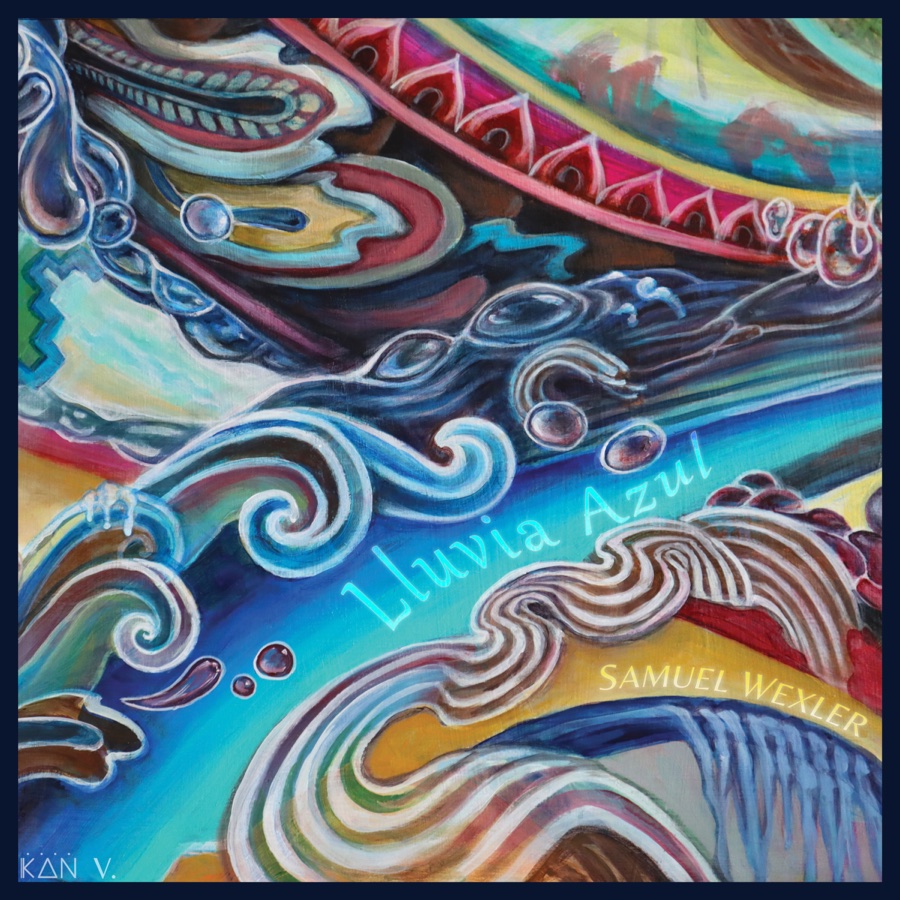
V. Lluvia Azul / Morgan Mandala and Randal Roberts
Want to feel Emotive & Deep?
Movement V 34 min
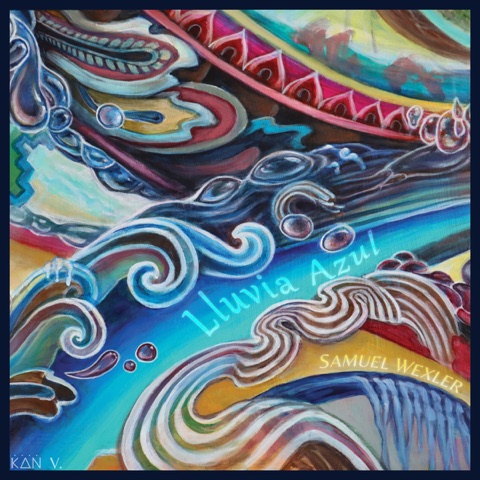
Lluvia AzulBlue Rain
Weaves you deeper and deeper into lush emotive strings, in a continually evolving flow, full of surprises. Seamlessly pass from deep contemplation to sudden inspiration. I let the story write itself, surprising me many times along the way, and only later began to understand the narrative. One minute you are in the depths of despair, then before you know it you have passed through the dark night and emerged into the gentle embrace of new light. This ever-evolving flow takes you through the full cycle of death and rebirth, and dares you to dream of a harmonious reality.
Before I had any clear musical ideas developed for the soundtrack I could already envision some of the sound colors I wanted to hear. I knew that instruments with doubled strings would be an important part of the overall sound I felt for KAN, so I bought a 12 string guitar and an 8 string ukulele to add to the mandolin and charango I already had. I also knew that I wanted the sound of a handpan, so I bought a steel tongue drum in A minor to have that sound available at an affordable price.
The beautiful resonance of these doubled string instruments is a huge part of the KAN sound, and one of my favorite parts of the whole soundtrack features only these instruments, in Stepping Softly into the Promised Land. I just love the delicate quality and the texture that these four instruments form as they weave in and out of each other, each with some aspects of sound in common, yet distinct. I also love that the more sustained and dramatic sound of the violin finally clears out, giving a feeling of spaciousness.
There is a manouche moment in here too, another surprise I did not plan and chose to allow.
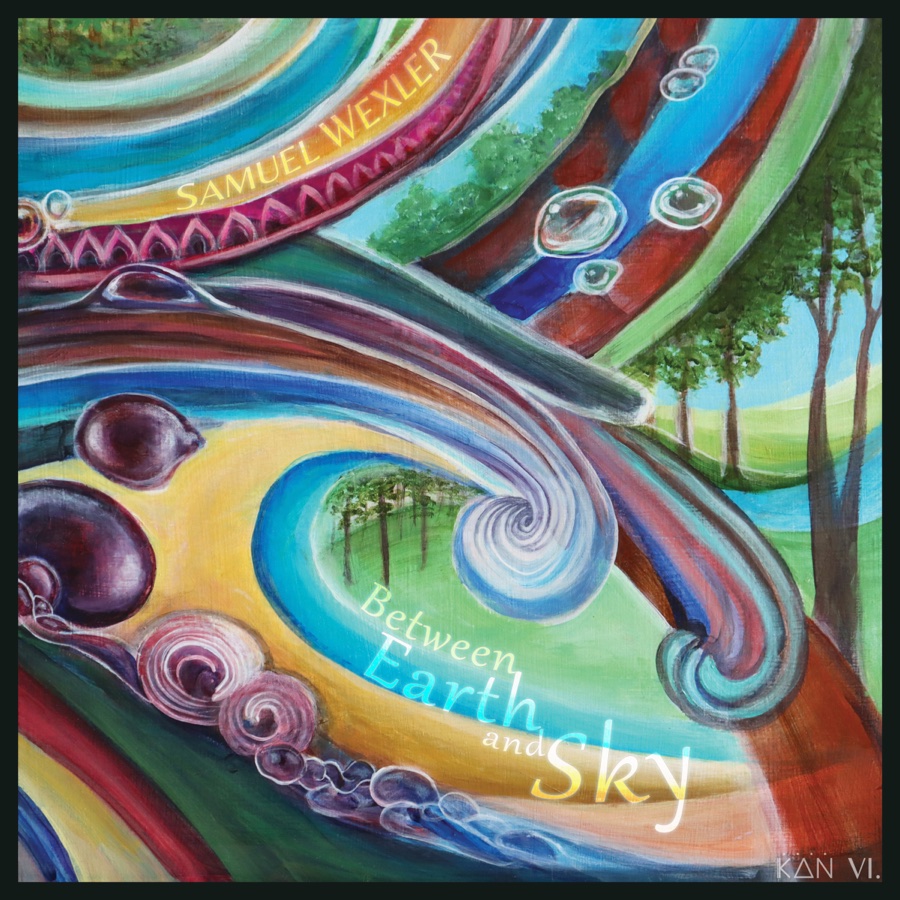
VI. Between Earth and Sky / Morgan Mandala and Randal Roberts
Want to feel Fresh & Hopeful?
Movement VI 15 min
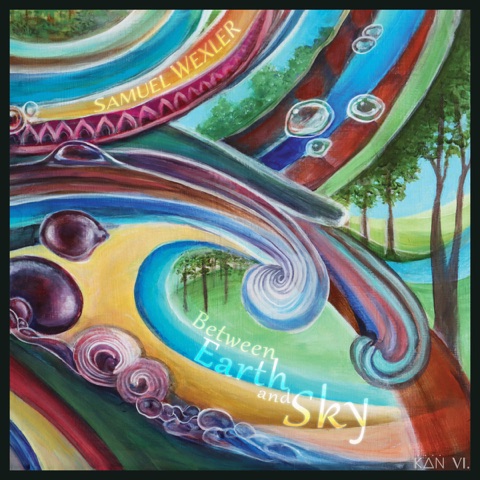
Between Earth and Sky
Light, free, luminous and hopeful. Transcend the weight of this world, then merge with the beyond. Sparkles and shines as it carries you full circle back to the hopeful yet mysterious birth of KAN.
Before Sam Gordon asked me to write the official KAN soundtrack, he called me one day saying that he needed some good original music for a video. At the time I had been working on Between Earth and Sky as a live loop composition for my live album Less Than Three. I felt like the peaceful and luminous nature of the composition should work well, so I sent a live recording I had made. He loved it, and said it worked perfectly.
So later, when he asked me to write the KAN soundtrack, I knew I wanted to make an expanded studio version which would develop the music further and bring it all together with the other musical ideas of KAN. I really enjoyed getting to reimagine this piece without the strict limitations I imposed on myself in Less Than Three.
I was so happy as the final musical ideas came together at the end of Between Earth and Sky, to conclude the whole KAN soundtrack the same way it started: in a continuous spiral upwards.
Notes from the year it took. The intention was to let the music evolve and write itself however it wanted, and not to form it into what I thought they wanted.
Samuel Gordon, founder of KAN Tulum, called me and said: "We want you to write the KAN soundtrack, to play throughout the hotel and for our videos."
"I would be honored to," I said. "Tell me more about what you are going for."
"We don't know. You're the musician, we love what you do, and we trust you. Make whatever you want to make for us, however you want to make it."
Now that is certainly the type of commission that every artist dreams of. I knew I had to make something special, but had no clear idea of what. So I visited KAN Tulum and inspired myself by the land, the architecture, and the intention of a space designed to coexist harmoniously with nature. In that visit I discovered the musical seeds that would eventually blossom into the full six movement musical journey that is the KAN soundtrack.
Musical seeds
The harmonic seed came first, on a 12 string guitar outside my room in Tulum, with the wind singing through the trees. That story is under Wind Sings the Trees, above.
Then I wanted to find a bite sized musical idea, what we would call a motive in classical music, to represent KAN. I liked the idea of assigning a note for each of the three letters. I felt the A should rise to feel more open, and the N should descend to give a feeling of closure.
And after finding the first chord progression, I started finger picking it in rhythm, and one pattern kept coming out. Maybe it is for a lack of technical versatility as a guitarist, but I just felt pulled back to that rhythmic pattern every time I was working on KAN, so it became the core rhythmic idea.
For musicians: the three seeds, by name
The harmonic seed
Cmaj7, plucked note by note on a 12 string. The progression that grew out of it runs through all six movements: stretched to the maximum in Lo Intempestivo, given rhythm for the first time in Tocando las Estrellas, and expanded to include A minor in Rhythm of the Jungle. This is it, from the opening of Wind Sings the Trees.
The melodic seed
Three notes outlining that first Cmaj7 chord, one for each letter of KAN: B, C and G. The A rises to feel more open, the N descends to close. That became one of the core melodic ideas developed throughout the soundtrack.
The rhythmic seed
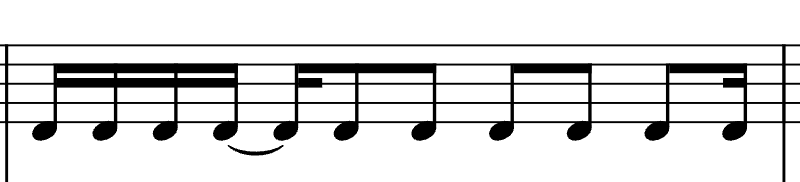
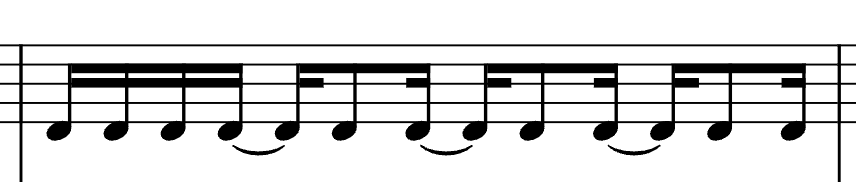
The finger picking pattern that kept coming back. Combining that rhythm with the first Cmaj7 chord created the second core melodic idea, and it appears all throughout KAN: in the finger picking that opens Tocando las Estrellas, in Rhythm of the Jungle, and in plenty of other places. It is the hardest of the three to point at in a recording, because it is woven through everything rather than stated on its own, so here it is on paper.
One rhythm, written two ways
A choice to shift from darkness into light
The first harmonic progression of KAN presents a simple choice of where we want to end up, provided the same circumstances. It starts the same way both times. Halfway through we go to a minor chord, which I feel brings a feeling of sadness. The second time we simply switch to the major, which all of a sudden feels like the new, true and positive home base of the whole soundtrack.
The point, of course, is not to force positivity or to ignore the sorrows of our existence. It is to recognize that in the present moment of undefined potential, given the same story leading up to it, we have the choice to sink into despair or to flip the switch into a harmonious reality.
This represents the choice we have in every moment: what we focus our attention on, what we aim for, and the reality we choose to cultivate, both internally and collectively. There is a lot going on, and sometimes this can feel complicated. Sometimes it really is as simple as making the choice.
The music reflects that flip. At every step along the way through the soundtrack we can arrive at that resolution chord as either E minor or E major. Both work. It is simply a choice.
Leaning into my weaknesses
The KAN chord progression is relatively simple. As a violinist primarily, my technical understanding of harmonic progressions is something that I continue to develop, but do not feel is my strength, nor something I naturally learned through my music studies in the same way that a pianist might. Instead of seeing this as an obstacle, I tried to let my ignorance open the door for an intuitive discovery of the harmonies. I wrote most of the progressions on the guitar, allowing my hands to experiment with going to different places without knowing how it would sound, keeping the chords I liked, then using my knowledge of music theory to analyze them and apply them to other instruments.
Letting it write itself
I did not start with a clear idea of how long it would be, or how many movements. There were major surprises that I did not anticipate but wanted to allow: the drum break, the Sanskrit chanting, the psychedelic moment and the Mozartian section in Tocando las Estrellas, the manouche moment in Lluvia Azul. And I was so happy as the final musical ideas came together at the end of Between Earth and Sky, to conclude the whole soundtrack the same way it started, in a continuous spiral upwards.
One more thing wrote itself. I tuned the strings to each other rather than to a chromatic tuner, and changes of temperature detune instruments. The pitches of most instruments went higher and higher over the months, and I pitch corrected those that were lower to match the rest. The end of the soundtrack sits about thirty cents higher than the beginning.
Why record every part myself
Instead of recording professionals specialized in each instrument:
To see what I could achieve all by myself, after years of collaborations.
To improve my skills in my weak areas. Recording is an amazing tool for hearing problems better.
To own one hundred percent of all the rights.
To stay in my personal creative flow, without needing to formalize or externalize the parts. To record the parts I wanted to hear as they occurred to me, and to allow the music to write itself.
I knew that my violin skills far outshine my technical abilities on any other instrument, but felt like my abilities on the other instruments were adequate for what I needed them for in the context of the soundtrack. I wanted to see what I could do all by myself, recording every instrument and voice alone. Many times I found that I was not good enough at whatever instrument I was playing to execute the musical idea I had in mind. Rather than getting discouraged I connected to my patience and chose to see it as a growth opportunity.
Re-contextualizing the goal
The goal of making KAN could be conceptualized in many different ways, and depending on which one I focused on, it led me to a different feeling, a different internal state, a different motivation, and a different vision of where I was going. It also affected how I went about producing it, the musical and production choices themselves.
So I tried to illuminate the whole constellation of goals held inside the goal of making KAN, and to shift focus between them in order to stay positive, balanced and as focused as possible:
The goal was to create an amazing musical experience.
The goal was to learn how to create an amazing musical experience. How to record, how to mix.
The goal was to improve my skills on each instrument.
The goal was to become a person that completes what he starts.
To see what I was capable of creating all by myself.
The goal was to discover more about myself through the creative process.
The goal was to become a more clear conduit through which universal inspiration and creativity can flow.
To deliver a soundtrack that would work for KAN Tulum.
To sharpen my ear.
In practice it worked like this. When I could not get a clean take of a guitar part, holding the goal as "deliver a top quality album" made the buzzes feel like failure, and that is a hard place to stay motivated from. Shifting the focus to "improve my skills on each instrument" turned the same afternoon into exactly what it was for. The recording project became a tool in service of my guitar playing.
The technical side worked the same way. Experimenting with four microphone configurations on the drums was slow, and against the goal of finishing it read as an obstacle. Against the goal of learning how to create an amazing musical experience, how to record, how to mix, how to choose and dial in a preamp, it was the goal itself. I was succeeding at the thing I had decided I was doing.
Ways I am not as amazing as it might seem
Without a doubt KAN was a major accomplishment, and I was honestly amazed at what I achieved. I do not want to negate that. But I think it matters to be transparent about the weak points rather than only showing the win.
Sometimes tons of takes to get one good one. The vocal takes are real, not autotuned or enhanced, but lacking consistency. Guitar buzzes.
The manouche guitar was recorded chord by chord. Set my hand to one chord, record a minute, figure out the voicing for the next chord, record a minute, continue until all the chords are recorded, extract the best sounding loops of each chord, assemble the progression. A pro manouche guitarist could easily execute it even better in one take, but I do not have that fluency yet.
The piano is MIDI. I played it in live, but adjusted the MIDI in post when necessary. My keyboard skills are not as sharp as I would like either.
Quantizing in Lluvia Azul. In some moments the interlocking rhythms did not click. Sometimes I re-recorded them, sometimes I adjusted them in post.
Pitch correction on the instruments, and in Dreams Become Reality a tuning difference between the voice and the strings.
Help from Cualli mixing Rhythm of the Jungle. Help from Chema mixing all the drums, and in general.
Feeling like I would never finish anything
There was a major emotional breakthrough finishing Tocando las Estrellas, and another later, finishing the whole soundtrack. The external pressure of knowing that Sam was counting on me helped a lot to keep working all the way through. So did the power of a firm decision to stick with it and keep showing up.
Before KAN I would often jump from project to project, leaving a trail of unfinished work behind me, Less Than Three among it. I had finished smaller works, but this was the first time I saw a major project all the way through to completion, and finally proving to myself that I could changed my life.
It is more important to complete one project than to work on the perfect project.
I wanted to record myself playing real instruments for as much of the KAN soundtrack as possible. For example, I could have easily found a great sounding sample of a handpan or steel tongue drum, but I wanted, as much as possible, to have my personal human touch on it, to hear it back and remember recording it with my own two hands. I wanted it to not just sound like every other track that uses a great sounding handpan sample from a popular library, but to be infused with its own sound: the sound of my hand built studio, the sound of the natural resonances that occur from the interactions of the different frequencies in the body of the drum. I wanted it to be real, even though programming it would have been simpler.
For gear people: what I bought, and why
Good value, a few notches up
For most of my life I have always been attracted to high value budget gear. It is amazing to see music tech progress, and I love seeing how good a sound can come at how low a price, as new gear comes out constantly. Even as a serious professional musician, I somehow felt it was more responsible to buy good budget gear, then find creative and resourceful ways to get the most out of it, rather than pay top dollar for premium name brand gear. I figured if I could get eighty percent of the quality for twenty percent of the price, that was more responsible.
But for KAN, that twenty percent difference in quality felt important, so I decided to experiment with a different mentality. I realized budget gear can sound shockingly good for the price. But still, "for the price" is not the same as "sounds shockingly good, period." What if I kept my love of high value gear, but applied it a few notches up the spectrum? Instead of paying fifty dollars for a microphone that sounds like three hundred, why not spend three hundred for a microphone that sounds like fifteen hundred?
What I actually bought
A matched pair of Stellar X2 microphones and a Stellar X2 Vintage for a different sound color, and I recorded almost everything with them, placed in different ways. The audio interface was a tough decision, but I eventually decided to do something I would never have done before and buy the established brand for prosumer audio, the Universal Audio Apollo Twin X. I had been impressed by the great budget interfaces I had before, but after an A/B comparison of identical setups on different interfaces, I was amazed that the UA really did sound way better. It was absolutely worth the investment, especially since Samuel Gordon gave me the budget for it. I also upgraded my studio monitors to a pair of Kali IN-5s, so much better than my previous pair.
I did not have the budget for premium everything, so I found decent quality budget instruments, built the acoustic panels from scratch, and used thick tree bark collected from my hikes in the forest for acoustic diffusion. I identified the places where investing higher end would matter most, and where I could cut costs to make it all work.
Listen in full
The KAN soundtrack dares you to step into a harmonious reality.
KAN is instrumental, cinematic and built in moods, which is most of what a music supervisor is looking for. I own every right to it, so licensing is one conversation rather than five.
A hotel called and told me to make whatever I wanted, however I wanted to make it. If you have a space, a film or a project that needs its own music, tell me the feeling you are after.
Composed, performed, recorded, produced, mixed and digitally mastered by Samuel Wexler. Artwork by Morgan Mandala and Randal Roberts. Originally commissioned by KAN Tulum, then it took on a life of its own. Mixing help from Cualli on Rhythm of the Jungle, and from Chema Davila on the drums, overall mix feedback, and analog mastering. Released 17 May 2022.